
Weeks 1–2
Pain
Calm the joint down.
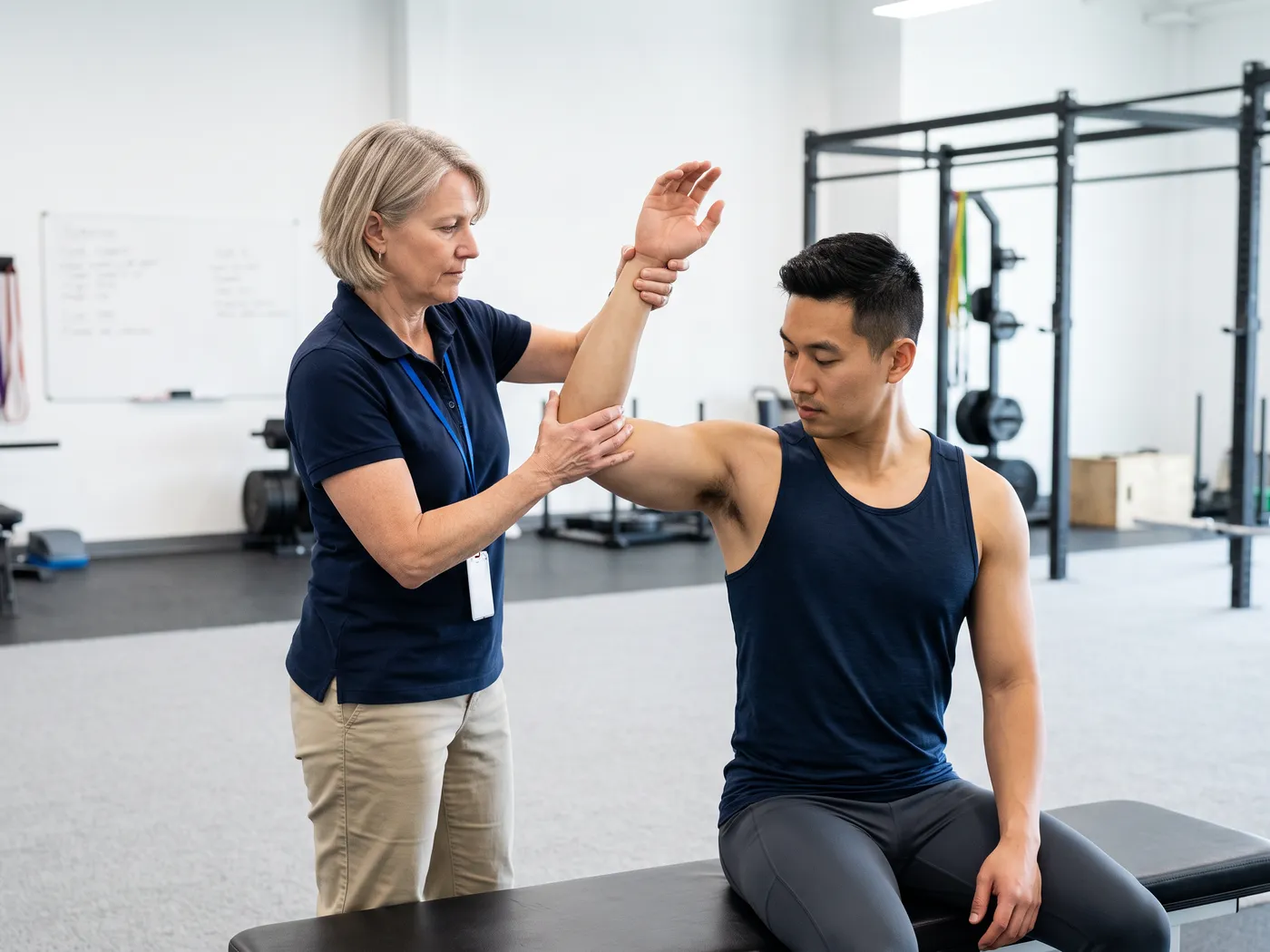
Hands-on techniques and activity modification calm inflammation and swelling, whichever joint is involved.
What We Treat
Achy knees some days, stiff fingers on others, a hip that won’t cooperate by evening. Joint pain shows up in a lot of forms, and it’s fixable once we find what’s actually driving it in your case, not just where it hurts.
Sound Familiar?
Two or more? Keep reading.
Why It Happens
You’re the one who’s learned to work around the stiff mornings and the achy hands, because there’s always something that needs doing before you’d ever stop to deal with your own joints. That habit of putting yourself last is exactly why the actual cause behind the ache so rarely gets sorted out.
Joint pain isn’t one condition, it’s an umbrella covering a handful of different problems: cartilage wearing down in an osteoarthritic joint, the immune system driving inflammation in rheumatoid arthritis, uric acid crystals irritating a joint during a gout flare, or an inflamed bursa cushioning a shoulder or hip that’s gotten cranky. Each one can look similar from the outside: an ache, some swelling, stiffness that’s worse in the morning, but they don’t respond to the same treatment.
That’s exactly why a generic stretching sheet or an ice pack so often falls short: it treats the ache without ever sorting out which of those processes is actually driving it. A real, cause-first evaluation looks at which joints are involved, how they move, and what pattern your symptoms follow, then builds a plan around the actual cause instead of just the pain.
The Honest Truth
Nobody regrets starting too early. Every week, someone in our clinic says they regret waiting.
How We Fix It
Every plan has an endpoint. Here’s what the four phases look like for joint pain.
Weeks 1–2
Pain
Hands-on techniques and activity modification calm inflammation and swelling, whichever joint is involved.
Weeks 2–6
Prime
Targeted mobility work restores range in the joint and the areas around it that have quietly stiffened up.
Weeks 6–10
Perform
Progressive strengthening supports the joint under real-world load, from stairs to yard work.
Weeks 10+
Prevent
Joint-specific protection strategies and a home program keep flare-ups from creeping back in: that’s the endpoint, not just another appointment.
Shoulder pain and weakness affected my sleep and daily functioning. Their therapies and exercises lessened the inflammation, then strengthened my shoulder, arm, and back muscles.
Mary S. · Joint Pain, Google review
Before: joint pain and weakness bad enough to disrupt sleep and daily life
After: inflammation down, and real strength built back into the joint and surrounding muscles
Questions, Answered
Not necessarily. If you’ve already had imaging or labs from your doctor, bring them along and we’ll factor them in. But you don’t need a diagnosis in hand to start: a hands-on evaluation can usually tell us which joints are driving your pain and how to help right away. If something looks like it needs bloodwork or imaging we haven’t seen yet, we’ll point you in the right direction.
Not always. “Joint pain” is really an umbrella term: osteoarthritis, rheumatoid arthritis, gout, and bursitis can all show up as an aching or swollen joint, and each one responds a little differently. Part of your evaluation is sorting out which pattern fits you, so your plan actually matches what’s going on instead of a one-size-fits-all approach.
Most people notice a change within the first 4–6 visits, especially in how much stiffness they wake up with. A full plan moves through all four phases, Pain, Prime, Perform, and Prevent, and how long that takes depends on which joints are involved and how long you’ve been dealing with it. Either way, you’ll know what phase you’re in and what’s left, not an open-ended string of visits.
Book Your Visit
Request a time and a real person calls you back. No phone tree. No ‘someone will reach out.’ Just a plan.
Rated on Google
A real person calls you back
Step 1 of 5
That’s the hard part done. We’ll call you to lock in your time. Most people are on the schedule same week.
Visit Us
Located Inside 
Located Inside