1
We scan the tissue for restricted areas.
For scar tissue and adhesions built up under the skin: purpose-built instruments that find and break up the restriction so the tissue underneath can move again.
What It Is
IASTM stands for Instrument-Assisted Soft Tissue Mobilization. After an injury, or from months of overuse, scar tissue and adhesions can build up inside a muscle, tendon, or the connective tissue around it. That buildup restricts how the tissue glides against everything around it, and it can quietly limit motion and blood flow long after the original injury feels “better.”
We use specialized, purpose-built instruments to scan across the tissue and find those restricted areas, then apply controlled strokes to break the adhesions down. It’s a distinct, dedicated service in its own right: it shares a technique family with tools like Graston (which you may also see used within a manual therapy session here), but IASTM is its own focused visit built entirely around instrument-based tissue work.
Most people notice some redness or mild tenderness afterward, similar to a deep tissue massage. That’s the tissue responding, not a sign of harm.
You’re the one who’s had plenty of massages that felt great for a day before the tightness crept back. Which is exactly why a restriction that keeps returning needs tissue work aimed at breaking it down, not just easing it for an afternoon.
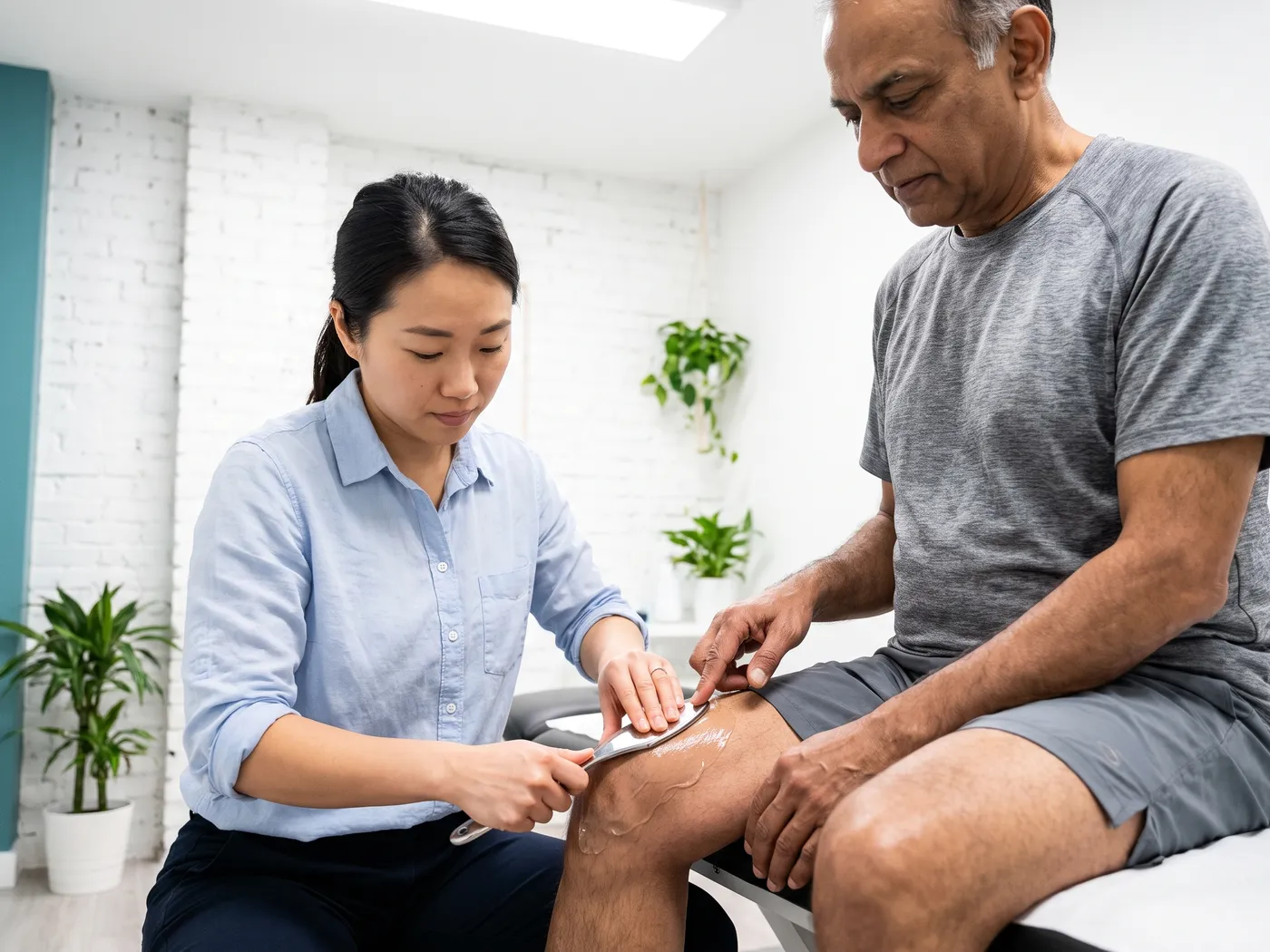 A tool-based approach, not massage
What It Helps
If tissue feels thick, ropey, or stuck no matter how much you stretch it, scar tissue or an adhesion is often why.
What A Session Looks Like
1
We scan the tissue for restricted areas.
2
Controlled strokes break up the adhesion.
3
We move the joint through its new range.
Why It Works
Reaches scar tissue massage alone can’t budge.
Increases blood flow to the treated area.
Restores range of motion faster.
Fits the plan you’re already on.
Questions, Answered
Most people feel pressure and some mild discomfort as the instrument works over a restricted area, similar to a deep tissue massage. It’s common to see some redness or light bruising afterward, which is a normal response and usually fades within a few days. We adjust pressure to what you can tolerate, and we’ll always tell you what to expect before we start.
It depends on your plan: IASTM is typically billed as part of your physical therapy visit, but coverage details vary by insurer. We verify your exact benefits before your first session, so there’s no surprise on your bill. Questions before then? Call us at (567) 356-4385.
It depends on how long the scar tissue or adhesion has been there and how it responds. Some people notice a change in one or two visits, while longstanding restrictions usually need a short series spaced across a few weeks. We’ll set expectations at your evaluation and adjust the plan as your tissue responds.
Book Your Visit
Request a time and a real person calls you back. No phone tree. No ‘someone will reach out.’ Just a plan.
Rated on Google
A real person calls you back
Step 1 of 5
That’s the hard part done. We’ll call you to lock in your time. Most people are on the schedule same week.
Visit Us
Located Inside 
Located Inside